

 See My Latest Article on HelloNation
What is a compounding pharmacy?
A compounding pharmacy prepares customized medications for individual patients when a standard, commercially manufactured drug does not meet a specific medical need. The pharmacist may combine, dilute, flavor, or reformulate ingredients into a different strength, dosage form, or delivery method.
For example, a prescriber may request:
- A liquid medicine for a child or an adult who cannot swallow tablets
- A capsule without a dye, lactose, gluten-containing ingredient, or another inactive ingredient
- A lower or differently measured strength
- A topical cream, gel, ointment, or lotion
- A medication in a form that is easier to apply or administer
- A preparation for a patient with an unusual dose requirement
Compounding is not the same as simply filling a prescription from a manufacturer. It involves preparing a formulation according to a prescription, medication order, or established professional procedure.
How does the compounding process work?
The process begins with an evaluation of the patient’s prescription and the reason a customized preparation is needed. The pharmacist reviews the medication, strength, dosage form, ingredients, directions, allergies, and other relevant factors.
A typical process includes:
1. Prescription review: The pharmacist checks whether the formulation is appropriate, whether the ingredients are suitable, and whether the directions are clear.
2. Formula selection or development: The pharmacy uses a recognized formulation when one is available or develops a preparation based on pharmaceutical references and professional standards.
3. Ingredient verification: Ingredients are identified, measured, and checked for quality, expiration dates, storage requirements, and suitability for the intended preparation.
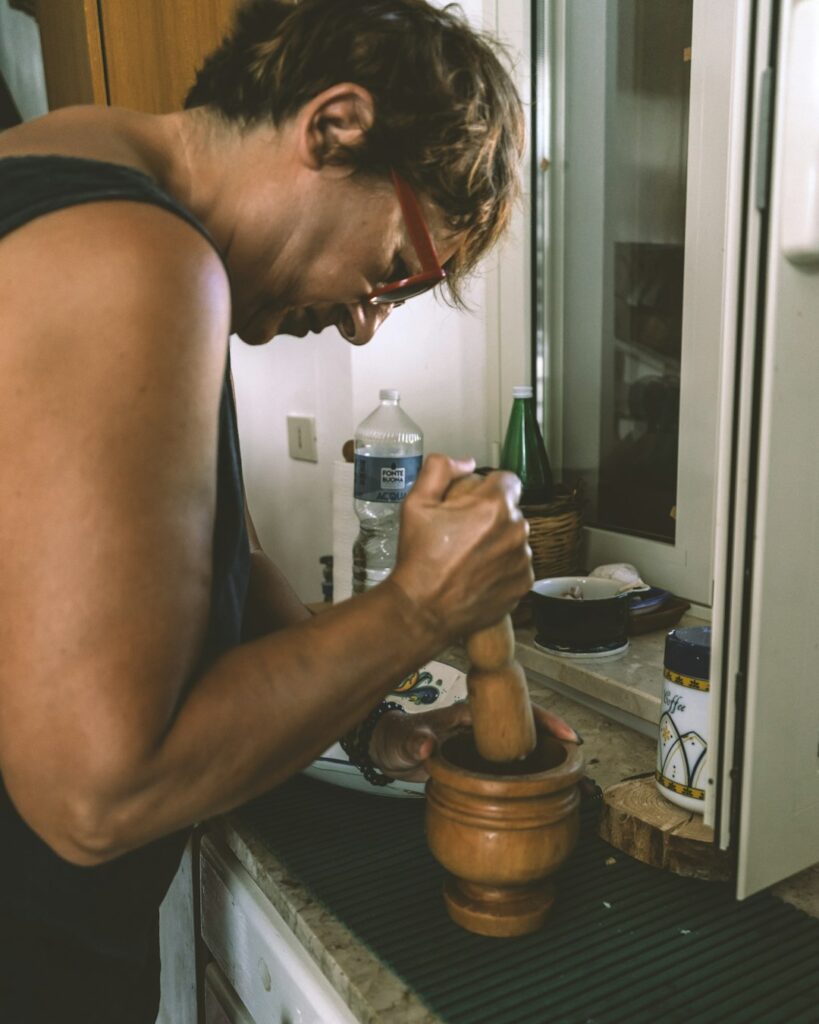
4. Preparation: The medication is mixed, dissolved, triturated, encapsulated, emulsified, or otherwise prepared using equipment appropriate for the dosage form.
5. Quality checks: The finished preparation may be checked for appearance, weight, uniformity, pH, volume, or other characteristics. Sterile preparations require more extensive controls.
6. Labeling and dispensing: The label includes directions, storage information, beyond-use dating, warnings, and other required details.
The exact process depends on whether the medication is nonsterile, sterile, hazardous, or intended for a particular route of administration.
Why might a patient need a compounded medication?
The most common reason is that an approved, commercially available product is not suitable for a particular patient. A person may need a dosage form, strength, or ingredient combination that is not available from a manufacturer.
Common examples include:
- A pediatric dose that is not commercially available
- A liquid form for someone who cannot swallow pills
- Removal of an inactive ingredient associated with an allergy or intolerance
- A medication that needs to be applied to the skin rather than taken by mouth
- A combination of ingredients prescribed for a specific treatment plan
- A temporary preparation during a shortage, when legally permitted and clinically appropriate
Compounding can be especially useful for children, older adults, people with swallowing difficulties, and patients whose treatment requires precise adjustments. It does not automatically make a medication safer, stronger, or more effective. Its value depends on whether the customized formulation addresses a genuine patient need.
Are compounded medications FDA-approved?
Compounded medications are generally not evaluated and approved by the FDA in the same way as commercially manufactured drugs. That means patients should not assume that a compounded preparation has undergone the same premarket review for safety, effectiveness, and manufacturing consistency as an approved product.
This does not mean every compounded medication is inappropriate. Compounding is a recognized part of pharmacy practice, but it carries responsibilities for formulation, ingredient quality, preparation technique, documentation, storage, and patient counseling.
Federal law distinguishes between traditional pharmacy compounding for an identified patient and larger-scale compounding performed by registered outsourcing facilities. Traditional compounding generally relies on a patient-specific prescription. Outsourcing facilities may prepare certain compounded medications for healthcare facilities without receiving a prescription for each individual patient, subject to different regulatory requirements.
State pharmacy rules also apply. In Texas, pharmacies operate under rules governing areas such as licensing, recordkeeping, labeling, sterile preparation, and pharmacy operations.
What is the difference between sterile and nonsterile compounding?
Nonsterile compounding involves preparations that do not need to be free of microorganisms. Examples may include capsules, creams, ointments, suspensions, and oral liquids.
Sterile compounding involves medications that must be prepared in a controlled environment to reduce the risk of contamination. Examples include certain injections, infusions, ophthalmic preparations, and other products that enter normally sterile parts of the body.

Sterile preparations require specialized facilities, equipment, environmental controls, staff training, testing, and procedures. A preparation intended for injection should never be treated as equivalent to a cream or capsule simply because both were prepared by a compounding pharmacy.
Hazardous medications also require special handling to protect patients, pharmacy staff, caregivers, and household members from unnecessary exposure.
How are compounded medications labeled and stored?
A compounded prescription should include clear instructions for use and storage. The label may identify the ingredients, concentration, dosage form, quantity, route of administration, beyond-use date, and special handling directions.
Beyond-use dating is not always the same as the expiration date printed on a commercially manufactured medication. It reflects the period during which the compounded preparation is expected to maintain acceptable quality under specified storage conditions. The date is based on factors such as formulation stability, container type, preparation method, available evidence, and storage temperature.
Storage deserves extra attention in Fort Worth, where hot weather can affect medications left in vehicles, garages, mailboxes, or areas without reliable temperature control. A medication that must be refrigerated should be stored according to the label, not in a freezer or directly against a cooling element unless specific instructions say otherwise. If a preparation has changed color, separated, developed an unusual odor, leaked, or been exposed to excessive heat, the dispensing pharmacy or prescribing healthcare professional should be consulted before use.
What safety questions should patients ask?
Patients have a reasonable interest in understanding how a customized medication was prepared. Useful questions include:
- Why is a compounded preparation needed instead of a manufactured product?
- What dosage form and concentration are being provided?
- How should it be stored?
- What is the beyond-use date?
- Does it require shaking, refrigeration, special measuring equipment, or protective handling?
- What should it look, smell, or feel like?
- Are there known concerns with the ingredients or route of administration?
- What should be done if a dose is missed or the medication is exposed to heat?
A pharmacist should also explain how to measure liquid medications accurately. Household teaspoons and tablespoons are not reliable measuring devices because their volumes vary. An oral syringe or another calibrated device is usually more accurate when the prescription calls for a measured liquid dose.
What are common misconceptions about compounding?
One misconception is that compounded medications are simply generic versions of brand-name drugs. A compounded preparation may contain the same active ingredient as a manufactured medication, but the formulation, dosage form, strength, inactive ingredients, stability, and regulatory status may differ.
Another misconception is that “natural” or customized automatically means risk-free. Compounded products can cause side effects, allergic reactions, interactions, dosing errors, contamination, or stability problems if they are not prepared and used appropriately.
Patients should also be cautious about products promoted for general use without a patient-specific medical reason. A customized medication should have a clear clinical purpose and directions from a qualified prescriber.
For local residents, the practical question is usually straightforward: does the medication solve a specific problem that a standard product cannot solve? If the answer is yes, compounding may be an appropriate option, provided the prescription, preparation, labeling, storage, and follow-up are handled carefully.